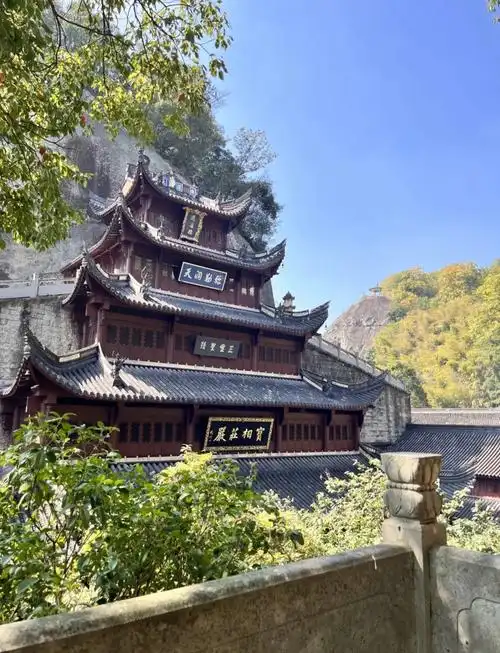
Leshan Giant Buddha Temple stands majestically at the confluence of the Min River, Dadu River, and Qingyi River. For over a thousand years, its incense offerings have never ceased, making it a spiritual landmark of Buddhist culture in southern Sichuan. Within the temple grounds, Ming Dynasty stone carvings of the Lotus Sutra are chiseled directly into the cliff face with powerful, axe-like strokes. The characters, vigorous and dynamic like coiling dragons and serpents, resonate artistically with the compassionate solemnity of the Leshan Giant Buddha.
The temple is renowned for its "Buddha's Radiant Zen Realm." Ancient halls with upturned eaves and interlocking brackets stand alongside rows of meditation chambers. Morning bells and evening drums accompany the lingering chants of sutras, purifying the mind and spirit.
The core attraction is the cluster of cliff-carved statues, dominated by the 71-meter-tall Tang Dynasty Buddha. Seated serenely in the river’s midst, hands resting on his knees, his feet seemingly treading upon the waves, he exudes overwhelming grandeur. The carved sutra texts follow the mountain’s contours, each character approximately 1.5 meters square—sharp, forceful strokes pierce the clouds like sword blades, while softer curves ripple like willow branches brushing water, earning this site the epithet "Dunhuang on the Cliff."
Ancient cypress trees tower within the temple precincts, some over a millennium old. Their gnarled trunks twist like dragons, and their dappled leaves whisper tales of a thousand years of Zen history.
Originally founded during the Zhenguan era of the Tang Dynasty, the temple was initiated under the supervision of Master Zhaozhou, a prominent Tang Buddhist monk, representing the pinnacle of Tang architectural and sculptural craftsmanship. During the Jiajing period of the Ming Dynasty, the abbot Master Wu’ai, another eminent Ming monk, oversaw a major restoration, commissioning the complete Lotus Sutra to be engraved in regular script along the cliff face—a breathtaking marvel known as the "Cliff-Sutra by the River."
More than a treasury of Buddhist art, the temple has long been a pilgrimage site for scholars and poets of southern Sichuan. The Northern Song literary giant Su Shi once visited and left behind the immortal verse: "The river flows beyond heaven and earth; the mountains appear and vanish in mist." For a thousand years, the incense has burned continuously, and the Zen spirit endures, unbroken.