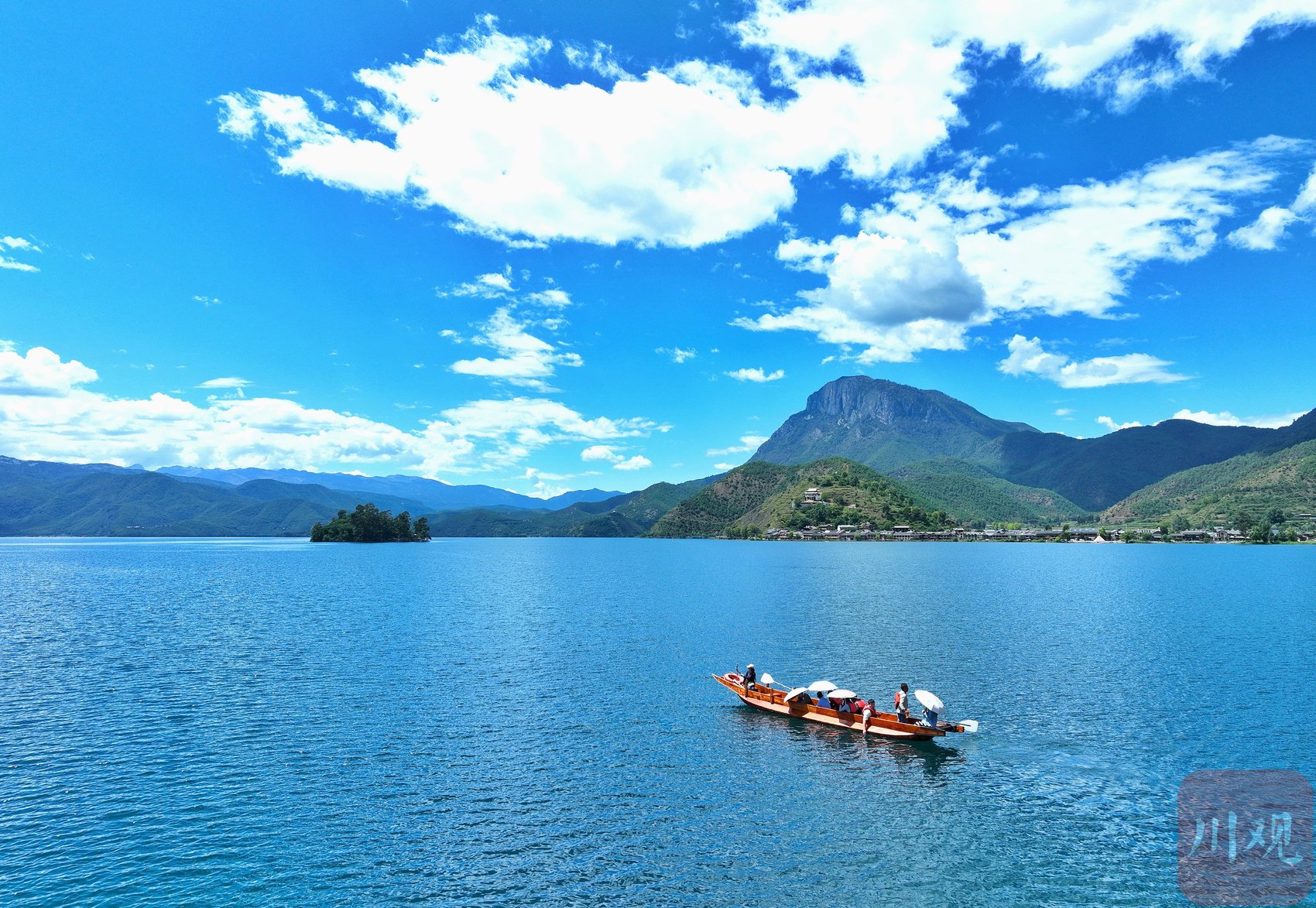
Lugu Lake, like a sapphire embedded in the Yunnan-Guizhou Plateau, boasts a lake surface at an elevation of 2689 meters, with perpetual azure waters reflecting the surrounding verdant mountains and the ancient Mosuo villages. Islands dot the lake, with the vast expanse of Caosha extending for dozens of miles, serving as a migratory stopover for birds and a living witness to the Mosuo people’s “zouhun” (walking marriage) tradition. Riding in pig trough boats across the lake, the bamboo rafts sway gently, as if entering the secret realm of the princess in the epic of Gesar. The viewing platform on Riggye Peninsula is the best spot to view the lake and mountains, with the lake and mountain scenery resembling ink wash paintings; Wangfei Sea is named after the legendary story of the last Mosuo chieftain’s princess, and the lake’s central island is perpetually shrouded in mist. Deep in Caosha, flocks of waterfowl nest among the reeds, and occasionally Mosuo girls paddle across the water with bamboo poles, the tinkling of silver jewelry interwoven with the ripples of the lake, creating a poem. In Lugu Lake’s mouth, the Liberation Village retains its matriarchal clan’s marriage and love traditions, and during the “lianhua” (daughter meeting) time, the girls pass on their feelings through the “zouhun” tradition, with copper-colored skin and highland sunshine jointly painting the beauty of human life. This lake has been a stopover on the Tea-Horse Road since ancient times; in the Ming Dynasty, Yang Shen recorded its “water color is like blue, clear to the bottom” in the “Yun Zhi,” and the Mosuo people still invite guests with their ancestral “gua tiao” bamboo rice. The Mosuo Museum on the lakeside displays ancient boats and carved wooden houses, telling the story of how this isolated tribe has preserved the ancient civilization’s code in the lake and mountain scenery.