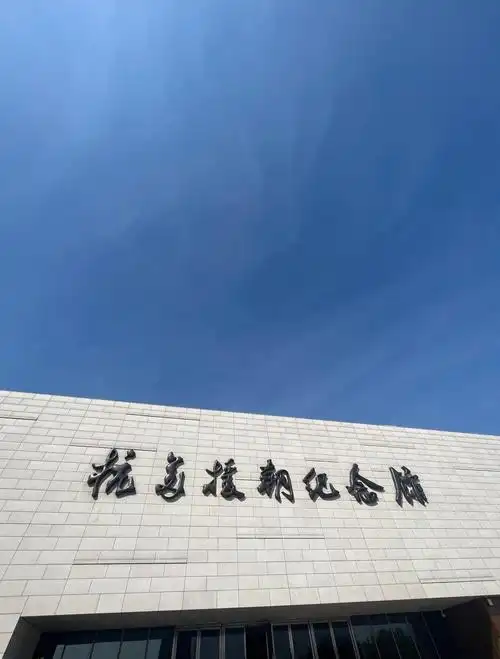
Dandong Museum serves as an important carrier of Liaodong culture, focusing on “bronze ware, porcelain, and folk artifacts,” constructing a dialogue across millennia. Inside, the bronze exhibition hall displays masterpieces from the Western Han Dynasty to the Tang Dynasty, including the Western Han “Tiger Devouring Cow Bronze Drum” showcasing the sophisticated lost-wax casting technique of border ethnic totem beliefs. The folk artifact area houses production and life tools brought by Qing Dynasty immigrants, a particularly striking “Korean-style tapestry” bearing the marks of time, recording the living memory of Sino-Korean cultural exchanges. The most eye-catching reconstructed Qing Dynasty border station scene, through 1:1 restoration of the stables, guardhouses, and signal towers, combined with audio-visual technology, allows visitors to seemingly hear the sound of horses’ hooves and see frontier soldiers transmitting military intelligence in the snow. This cultural hall, built in 1958, carries two thousand years of the Liaodong Peninsula’s cultural heritage. The collection of “Wanli Dynasty Korean Envoy Documents” witnesses the history of Sino-Korean emissaries, while the “Fucha Family [Qing Dynasty General]” documents reveal the Qing Dynasty’s military defense along the Yalu River. In the ethnic fusion exhibition area, a “Manchu-Han Fusion Banquet Table” tells the epic written by many ethnic groups on the border. The museum is not just a display of artifacts, but also a living historical theater, with each exhibit becoming a messenger across time.