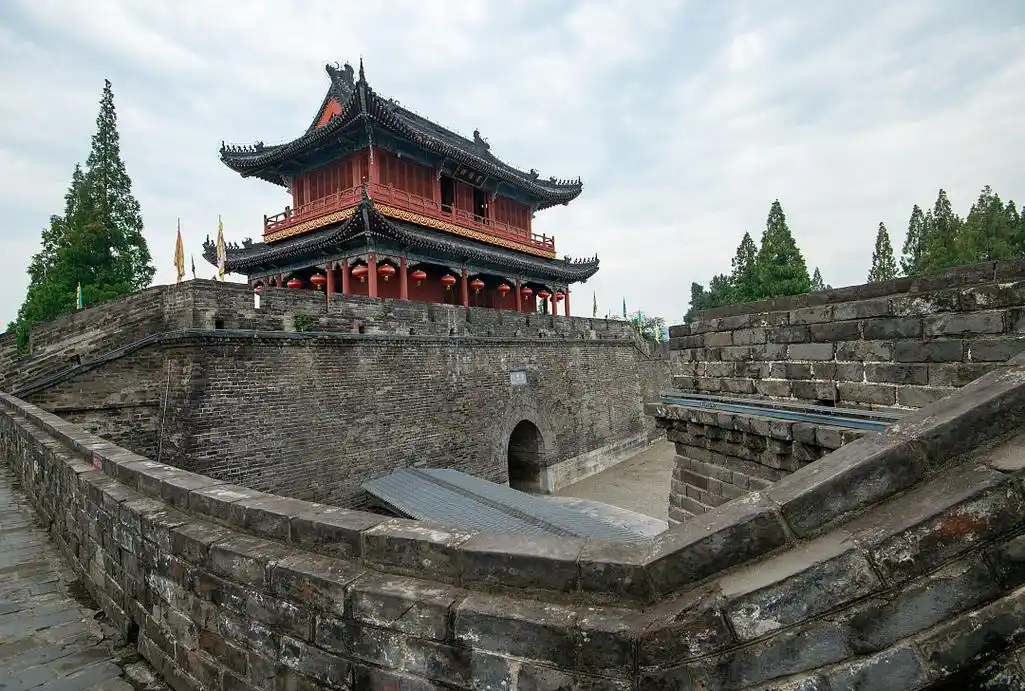
The ruins of the Lu’an Ancient City Wall represent a living relic of the Ming Dynasty’s military defense system. The surviving rammed-earth wall stretches approximately 1.2 kilometers in length, reaching up to 12 meters at its highest point. Built using traditional ramming techniques, the wall remains remarkably well-preserved; its textured earthen surface, tangible to the touch, carries the weight of six centuries of history and weathering.
Following the natural contours of the surrounding hills, the wall winds sinuously, with the remnants of nine city gates scattered like stars across the landscape. Among them, the eastern gate—known as “Binyang Gate”—still preserves traces of its original barbican. Within the gate’s archway, Ming-era arrow slits and firing holes remain clearly visible, evoking echoes of clashing armor from centuries past. Together with its moat, the wall formed an integrated defensive complex, bearing witness to Lu’an’s strategic military importance as a key stronghold in the Jianghuai region.
Constructed during the Jiajing reign of the Ming Dynasty as a crucial barrier against Japanese pirate raids, the wall’s rammed earth incorporates crushed stones and glutinous rice slurry—a testament to the ingenuity of ancient builders. Scattered beneath the wall, a collection of stone steles records historical events, including the fact that Li Zicheng, the famed leader of late-Ming peasant uprisings, once stationed troops here for defense. Faint traces of the characters “Jingnan” (referring to the Jingnan Campaign) can still be discerned between the bricks, silently recalling the smoke of those ancient battles.
From atop the wall, one gazes out over the Pi River, winding like a jade-green ribbon around the city. Below, old and new architecture interweave, creating a striking juxtaposition of past and present. Amidst the crumbling ramparts, the profound weight of history presses palpably upon the senses. Every inch of this rammed earth whispers tales of the Ming Dynasty’s rise and fall, allowing visitors to feel, within a single step, the eternal pulse of Chinese civilization.