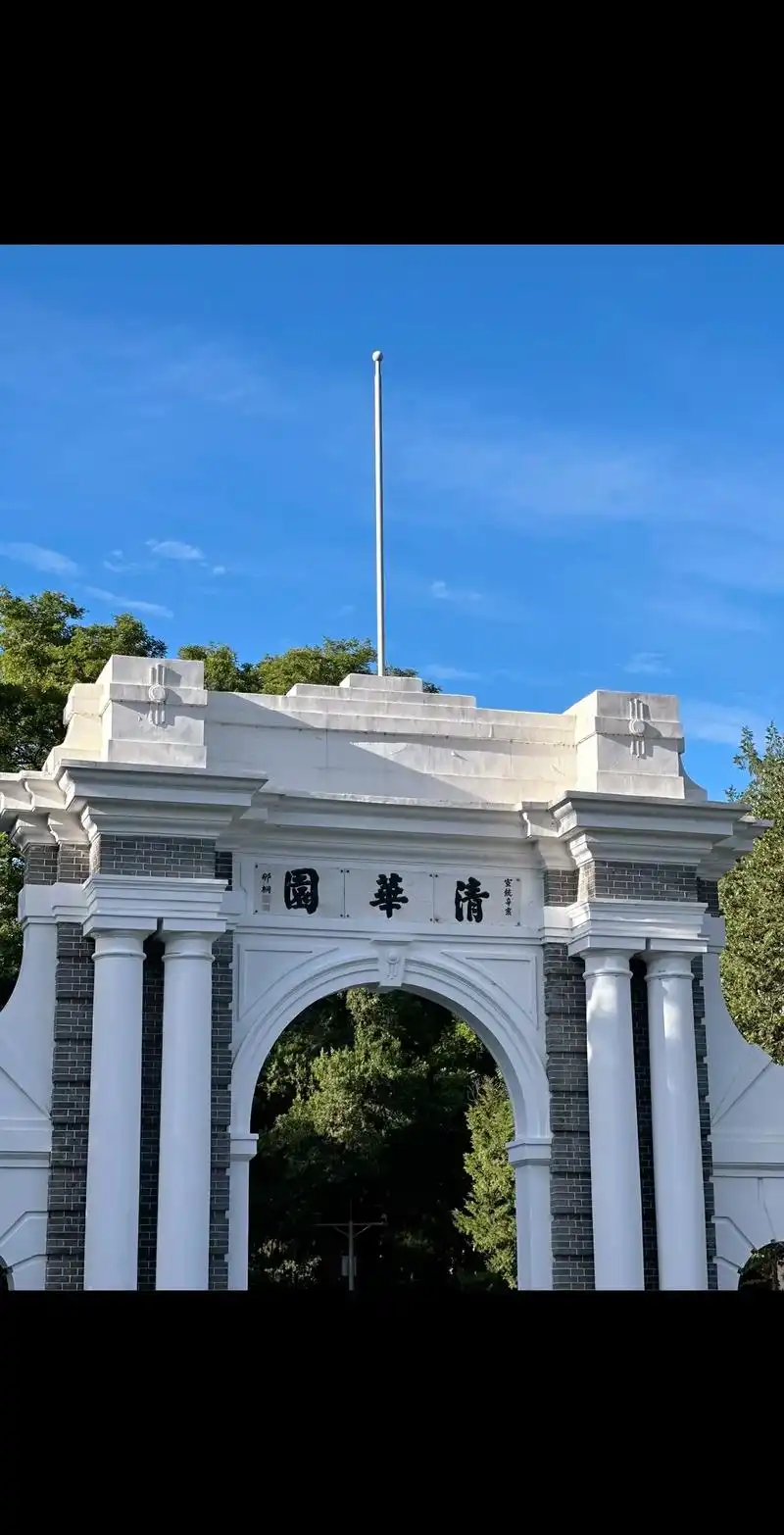
Tsinghua University, one of China's most prestigious academic institutions, is located in Beijing's Haidian District and renowned for its dual identity as both a poetic haven—epitomized by the famed "Moonlight over the Lotus Pond"—and a revered seat of learning. Within the campus, the tranquil lotus pond shimmers under the moonlight, echoing the lyrical words of Zhu Ziqing: "The moonlight was right before my eyes," a sentiment that still lingers in the night air of Tsinghua Garden. The iconic Erxiao Gate stands proudly at the entrance, its lintel bearing the dignified and elegant inscription "Tsinghua University," symbolizing the institution's century-old heritage. Before the library, the statues of the "Twenty-Eight Gentlemen" immortalize the pioneering figures of modern Chinese education; among them, bronze effigies of Mei Yiqi (educator), Liang Qichao (reformist leader), and other luminaries stand in silent vigil, watching over generations of seekers of knowledge.
Stepping into Jinchun Garden, visitors encounter the imperial plaque inscribed with "Jinchun" by Emperor Kangxi himself, while pavilions, terraces, and towers exude the refined elegance of a royal garden intertwined with scholarly grace. The painted murals beneath the dome of the Great Hall chronicle a century of academic legacy. Inside the University History Museum, treasures such as Wang Guowei’s (scholar) manuscripts, Qian Zhongshu’s (literary giant) notes, and Qian Xuesen’s (scientist) passport upon his return to China collectively narrate the glorious chapters of modern Chinese education. By the lotus pond, the stone inscription "Shuimu Qinghua" ("Clear Water and Flourishing Woods") seamlessly blends nature with humanistic spirit. Every corner of this century-old university embodies the motto—"Self-Discipline and Social Commitment"—making Tsinghua an enduring beacon of knowledge and aspiration.