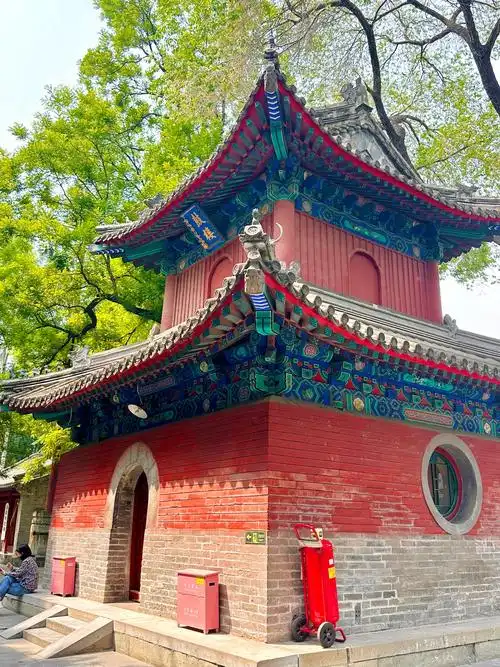
Fayuan Temple is located on Fayuan Temple Street in Beijing’s Xicheng District and is the city’s oldest Buddhist temple. Originally built during the Zhenguan era of the Tang Dynasty, it has stood for over a thousand years. The temple not only preserves the architectural style of the High Tang period but also embodies profound Buddhist cultural heritage, earning it the title “Beijing’s Premier Ancient Monastery.”
Along the central axis of the temple stand its main structures in sequence: the Mountain Gate, Hall of the Heavenly Kings, and Mahavira Hall. Their upturned eaves and interlocking brackets exude the grandeur of the Tang Dynasty, while vermilion walls and golden-tiled roofs harmonize beautifully with ancient pines and cypresses. Most striking of all is the millennium-old ginkgo tree before the Sutra Library—its gnarled branches twist like dragons, and in autumn, its golden leaves carpet the ground like a shimmering path leading to enlightenment.
The temple houses more than 30 surviving Tang-era stone steles, including the “Fayuan Temple Stele,” which records the flourishing scene of the eminent Tang monk Yijing translating Buddhist scriptures here during Emperor Taizong’s reign. A plaque inscribed with “Fayuan Temple” in the calligraphy of Emperor Qianlong still hangs in the Mountain Gate Hall. The temple also treasures a Ming-era woodblock edition of the Tripitaka, bestowed by the Yongle Emperor (Zhu Di), and couplets composed by the Qing-dynasty scholar Ji Xiaolan.
Strolling through the Stele Corridor, visitors encounter inscriptions by literary giants such as Su Shi and the patriotic Southern Song poet Wen Tianxiang, whose calligraphy engages in a silent dialogue across time with the incense-filled halls of worship. Every Qingming Festival, the temple hosts the “Fayuan Temple Cultural Festival,” featuring elegant guqin concerts and Chan tea ceremonies, infusing this ancient sanctuary with vibrant contemporary cultural life.