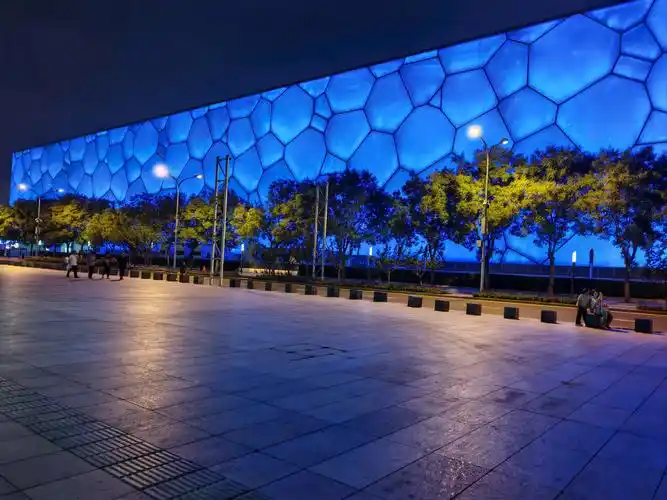
The Water Cube, or Beijing National Aquatics Center, is an iconic landmark in Beijing, celebrated for its striking exterior that mimics the structure of soap bubbles—symbolizing water and light. Designed by a collaboration of Australian and Chinese architects, it was constructed for the 2008 Beijing Olympic Games to host swimming, diving, and synchronized swimming events. Its unique ETFE (ethylene tetrafluoroethylene) membrane façade not only provides natural lighting and insulation but also reduces energy consumption, making it a model of sustainable architecture. Beyond its Olympic legacy, the Water Cube now serves as a multi-purpose facility offering public access to pools, fitness centers, and cultural exhibitions. Visitors can explore interactive displays on aquatic sports history, attend concerts, or enjoy leisure activities like ice skating in winter. The building embodies China’s modernization and commitment to innovation while preserving cultural symbolism—its bubble-like structure reflects traditional Chinese philosophy of harmony between nature and human design. For tourists, it's recommended to visit during daylight hours to fully appreciate the building’s luminous facade and consider combining the trip with nearby attractions such as the Bird’s Nest stadium or the Olympic Park. This blend of engineering excellence, environmental consciousness, and cultural storytelling makes the Water Cube a must-see destination in Beijing.