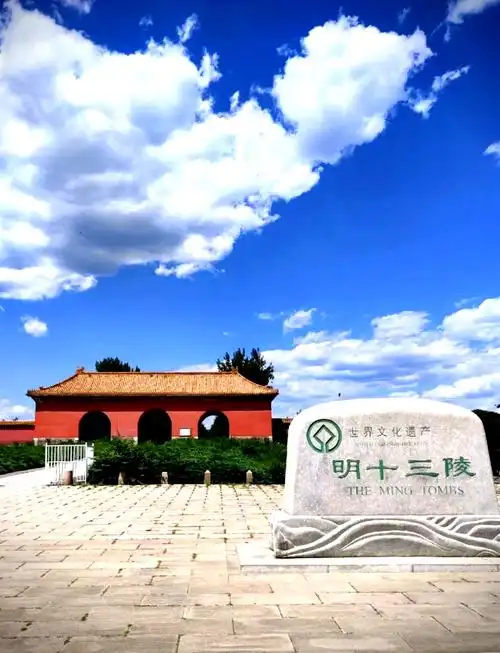
Located at the foot of Mount Tiānshòu in Changping District, Beijing, the Ming Thirteen Tombs is a complex of mausoleums for the thirteen emperors of the Ming Dynasty, renowned for its magnificent royal architectural group and profound historical depth. Within the tomb complex, a sacred road stretches for several kilometers, flanked by lifelike stone statues. Twelve pairs of stone statues guard the majesty of imperial power, embodying the symbolism of “The Emperor Guards the Gate of the Country.”
Long Tomb, as the first tomb, boasts the most extensive surviving Ming Dynasty wooden-structure building, the Kī’ēn Hall. The hall’s floor is paved with gold bricks, the wooden beams are painted with intricate designs, showcasing the grandeur of the royal court. The underground palace of Dìng Tomb is a marvel, with a tunnel 76 meters long and five layers of stone gates, witnessing the Ming Dynasty’s traditional “treating death as if it were life” ritualistic practices.
Here lies the ambition of the Yongle Emperor, Zhu Dì, who moved the capital to Beijing, and the cunning strategies of the Wanli Emperor, Zhu Yìqún. The tomb complex’s layout harmonizes with the “harmony between heaven and man” philosophy, and the location of the Xuan Gong followed the “left ancestor, right society” ritualistic norms. The tombstone of Li Qìng, the guardian of the tombs, remains intact, telling the story of the six-hundred-year-old guardian family’s vicissitudes. The bronze chime set and stone mythical beasts before the Kī’ēn Hall, along with the inscription “Wan Shì Yǒng Chāng” carved in stone, together create a dialogue across time. As dusk dyes the park a red hue, the sound of pine trees seems to still echo with imperial edicts, constantly illuminating the splendor of history in this slumbering imperial tomb.