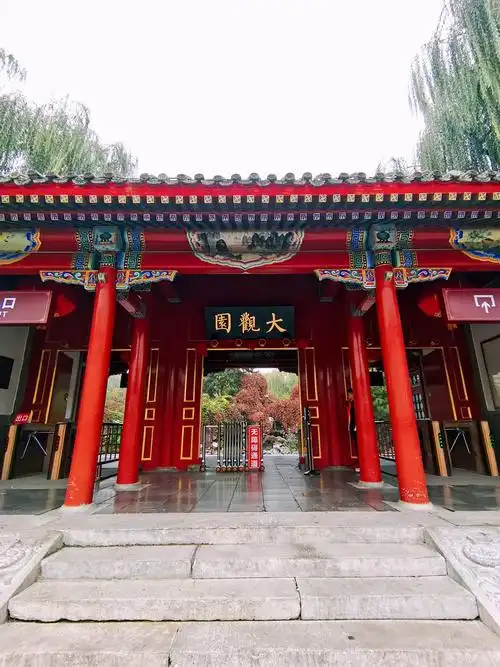
Mashan Daguan Garden is a brilliant gem of Jiangnan-style garden art from the Qing Dynasty, renowned for its exquisite layout and harmonious integration of poetic imagery. Within the garden, rockeries and water features are artfully arranged; winding paths lead to secluded spots, artificial hills rise like clouds, and pond waters reflect the sky. Pavilions, terraces, and towers are built beside the water, perfectly embodying the graceful elegance characteristic of Jiangnan gardens. Inscribed plaques and couplets throughout the garden were mostly composed by literati and poets, while stone tablets engraved with poetry are scattered everywhere, seamlessly unifying natural scenery with humanistic sentiment.
Key scenic areas include Peach Blossom Ferry, Pear Blossom Courtyard, Lotus Fragrance Pavilion, Qinfang Pavilion, and Longcui Nunnery. Peach Blossom Ferry is lined with peach trees along its banks, creating a breathtaking spectacle of falling petals in spring, once a favored gathering place for scholars and poets. Pear Blossom Courtyard serves as a venue for traditional opera performances, where the melodious strains of Kunqu Opera echo among intricately carved beams and painted rafters. Lotus Fragrance Pavilion offers serene views of lotus blossoms under moonlight, while the couplet at Qinfang Pavilion—“Willows by the bank borrow the moon at midnight; mountains across the water hold ten thousand lanterns”—invites deep contemplation. Longcui Nunnery showcases tea culture, offering visitors a taste of Zen-inspired living.
Originally built during the Qing Dynasty as a retreat for literati, Daguan Garden later gained widespread fame as the real-life prototype of the “Daguan Garden” described in the classic novel *Dream of the Red Chamber*. The celebrated Qing novelist Cao Xueqin once lived and wrote here, and the garden’s landscapes closely mirror those depicted in his masterpiece, making it a dual symbol of literary and garden artistry. The architecture throughout the garden employs the expressive techniques typical of Jiangnan gardens, with each scene subtly alluding to classical references—for instance, “Qinfang Pavilion” derives its name from the “Qinfang Sluice” mentioned in *Dream of the Red Chamber*, exemplifying the garden’s unique charm as a “poetic landscape.” Strolling through this garden feels like stepping back in time, immersing oneself in the profound depth and lyrical beauty of classical Chinese culture.