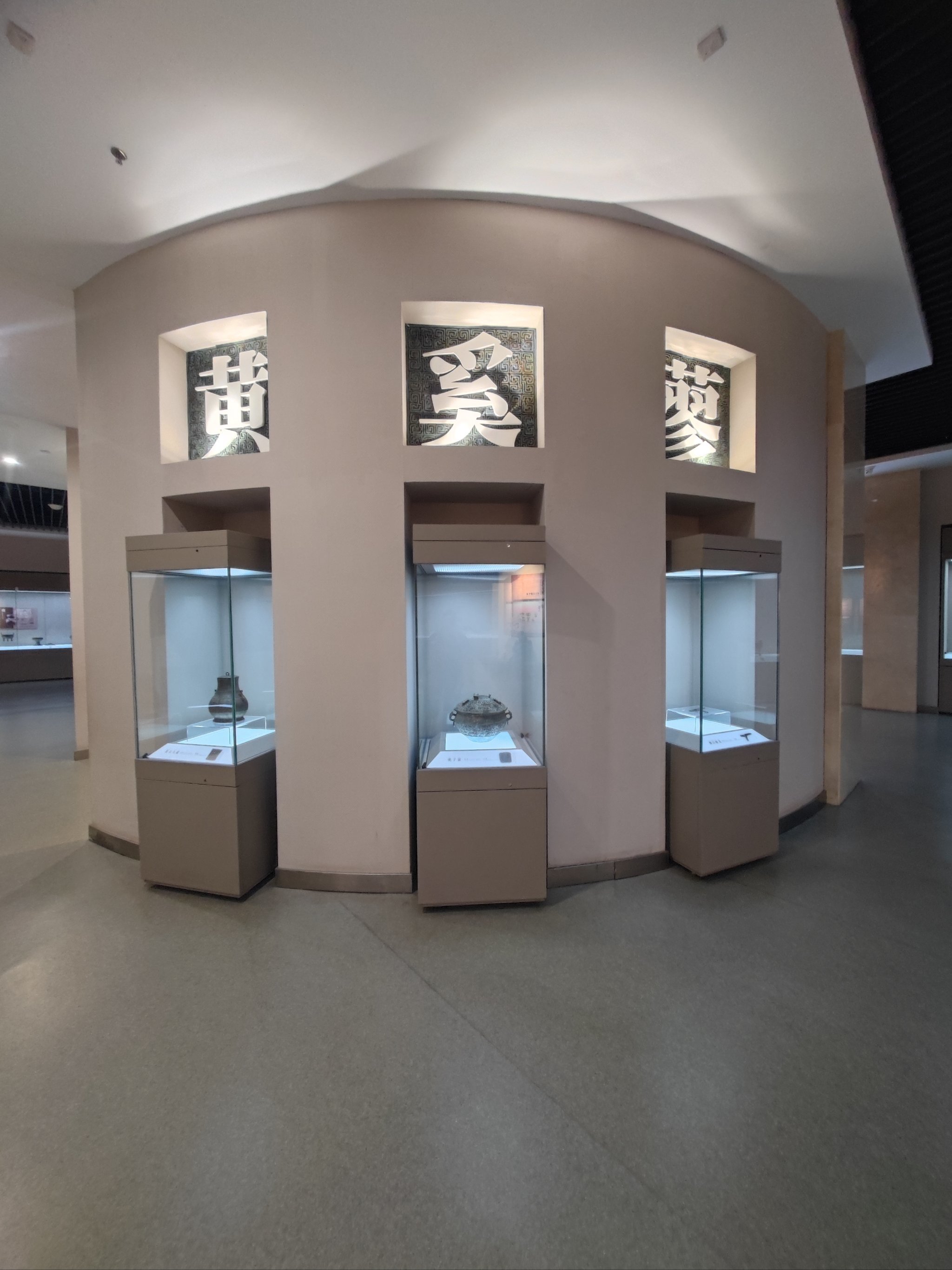
Xinyang Museum, nestled at the northern foot of the Dabie Mountains, is a cultural gem of southern Henan, showcasing the region's rich historical heritage. The museum houses over 30,000 artifacts, with its three major highlights being Shang-Zhou bronzes, Han dynasty ceramics, and revolutionary relics from the Hubei-Henan-Anhui border region. Through immersive exhibition technologies, millennia of civilization are vividly brought back to life through light and shadow.
In the Bronze Gallery, the intricately decorated "Ding Tripod of King Xiong Qu of Chu" exemplifies the zenith of Chu culture. In the Ceramics Hall, the vibrant glazes of the "Tang Sancai Horse" evoke the echoing camel bells along the ancient Silk Road. The Revolutionary Relics Exhibition employs multimedia interactive installations to recreate the heroic struggles of the Hubei-Henan-Anhui Soviet Base. Before the Memorial Wall listing the names of martyrs from Huang'an County, countless heroes are eternally remembered, their names engraved in the river of time.
Particularly striking is the special exhibition "Memories of the Dabie Mountains," which uses a 360-degree panoramic projection to dramatically reenact the historic 1947 advance of Liu and Deng’s army into the Dabie Mountains—a thousand-mile strategic leap that changed the course of history. Among the museum’s treasures, the "Marching Map of Li Zicheng"—the late Ming peasant rebellion leader—and the military manuscripts of Li Xiannian—a prominent Party and state leader—engage in a profound dialogue across three centuries. Inside the conservation studio, a national-level intangible cultural heritage inheritor meticulously restores a Ming dynasty blue-and-white porcelain piece using traditional techniques; the flowing glaze beneath their fingertips embodies not only artistic mastery but also an unwavering commitment to preserving civilization.
As a vital testament to Chu culture, Xinyang Museum not only displays bronze chime bells and lacquerware fragments but also carries forward the indomitable spirit expressed in the ancient saying, "Even if Chu has only three clans left, it will destroy Qin." Every artifact here is a cipher of time, waiting to resonate spiritually with every visitor across a thousand-year span.