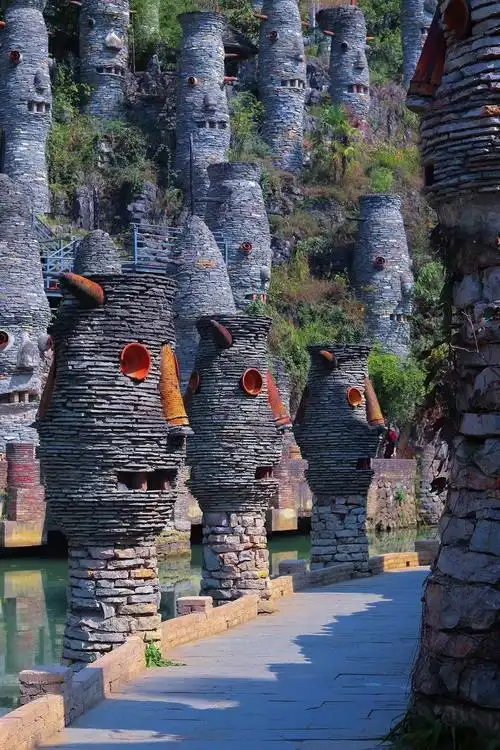
Hidden deep in the western outskirts of Guiyang, Huaxi Yelang Valley is a natural masterpiece where karst landscapes intertwine with meandering streams. Torrents cascade down sheer cliffs like silver chains, their thunderous roar and crystalline splashes echoing through the gorge. In autumn, forests blaze in vibrant hues—maples and Chinese tallow trees ignite the valley in fiery reds, transforming it into a living oil painting that captivates photographers with its interplay of light and shadow.
The valley’s centerpiece, “Dragon’s Chant Waterfall,” features three cascading tiers, with water plunging from hundred-meter-high cliffs in a roaring deluge reminiscent of a dragon’s bellow. Nearby, the “Jade Pool” shimmers year-round with emerald-green ripples, perfectly mirroring drifting clouds—a secluded haven for watching fish by day and stargazing by night. Winding along the stream, an elevated wooden trail leads to the “Ancient Yelang Vine,” where a thousand-year-old tree stretches gnarled branches across the ravine, its cascading vines like waterfalls, silently bearing witness to centuries of history.
The valley takes its name from the ancient Yelang Kingdom, once home to various ethnic minorities in southwestern China. Local Miao and Bouyei legends tell of “mountain gods guarding the waters,” tales still whispered among these hills. The Han dynasty poet Sima Xiangru (a renowned fu poet of the Western Han) once traveled through this region; his “Rhapsody on Yelang” described it as “a land of extraordinary mountains and rivers, rich in natural bounty,” leaving a lasting cultural legacy. Scattered throughout the valley are ruins of the ancient Yelang civilization—weathered stone inscriptions, fragmented steles, and rock paintings that speak of millennia-old heritage, seamlessly blending human history with the surrounding natural beauty to imbue this landscape with profound cultural depth.