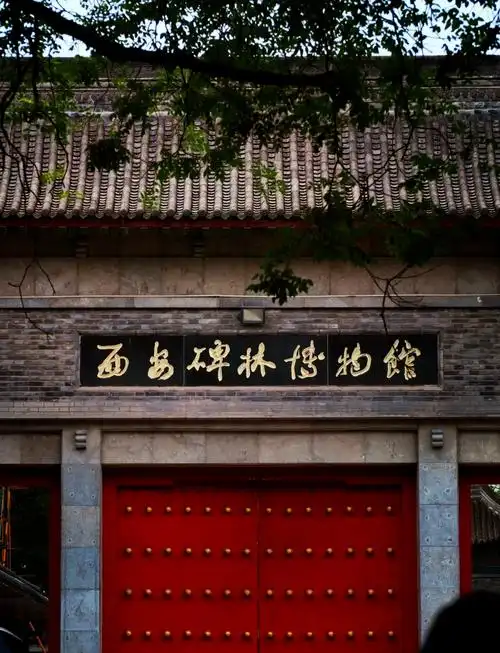
The Forest of Stone Steles Museum is a sanctuary of Chinese calligraphy, originally established during the Tang Dynasty. Over a millennium of accumulation has yielded a collection of nearly 3,000 stone steles—collectively forming a history of Chinese character evolution literally carved in stone. Stepping inside feels like walking through a corridor across time; each stele silently narrates the profound transformations of Chinese script.
The museum’s core exhibition area, “The Forest of Steles,” comprises two covered galleries. Among them, the Kai Cheng Stone Classics—Confucian texts meticulously engraved in regular script—exemplify the cultural legacy of the Tang golden age, with every character chiseled as if by knife and axe. Nearby stand two masterpieces by Yan Zhenqing [Tang Dynasty calligrapher]: the Duobao Pagoda Stele, bold and upright, and the Inscription of the Immortal Altar on Magu Mountain, robust yet rounded—demonstrating his masterful balance of strength and grace. Also displayed is Liu Gongquan’s [Tang Dynasty calligrapher] Xuan Mi Ta Stele, famed for its vigorous, sinewy strokes and hailed as a quintessential example of the celebrated “Yan’s tendons and Liu’s bones” style.
The museum also treasures Chu Suiliang’s [Tang Dynasty calligrapher] Yique Buddha Niche Stele, whose elegant, fluid brushwork epitomizes early Tang calligraphy. In the modern section, steles by Zhao Puchu [contemporary calligrapher] are exhibited, creating a dialogue between past and present that underscores the enduring allure of calligraphic art.
As China’s largest and most complete extant collection of stone steles, the Forest of Stone Steles is not only a treasury of calligraphy but also a living fossil of Chinese civilization. Every stone bears the echoes of history, inviting visitors to trace the origins of Chinese characters through the lingering scent of ink and immerse themselves in the profound depth of Chinese culture.