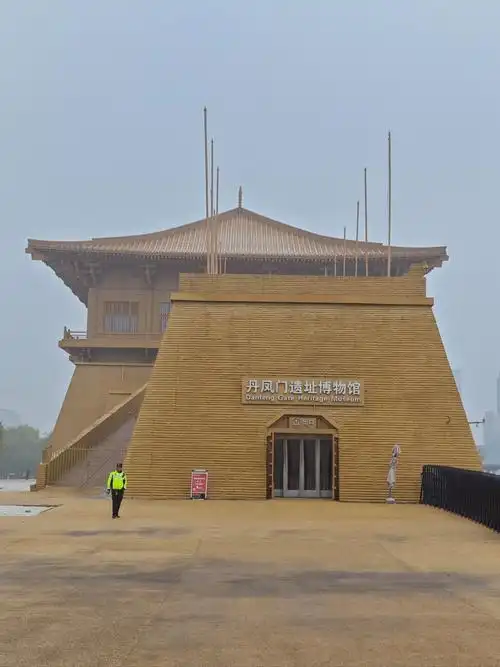
Daming Palace National Heritage Park, located in the eastern part of Xi’an, is the largest and most complete palace complex from the golden age of the Tang Dynasty, hailed as the “Palace of Ten Thousand Palaces.” Its grandeur and historical depth stir the soul; the surviving rammed-earth foundations lie like a slumbering dragon, silently recounting the glory of an era when “palaces opened beneath the nine celestial gates, and envoys from myriad nations bowed before the imperial headdress.”
The core area centers on the Ziwei Palace ruins, with the Danfeng Gate—the main entrance—spanning 155 meters at its base, having witnessed the transfer of power between Emperor Gaozong (Li Zhi) and Empress Wu Zetian. The foundation of the Hanyuan Hall stretches 760 meters long, marking the tallest architectural ensemble of the Tang Dynasty and once serving as the venue for grand imperial audiences. At the remains of Taiye Pond, fragments of rammed-earth walls and shattered roof tiles scattered across the pond bed seem to freeze time itself, reflecting Emperor Taizong’s (Li Shimin) ambitious achievements following the Xuanwu Gate Incident. The Wangxian Terrace ruins preserve the Tang tradition of “ascending heights to gaze afar,” offering panoramic views over the ancient layout of Chang’an.
As the eastern terminus of the Silk Road, Daming Palace stands as a testament to the confluence of Eastern and Western civilizations. Archaeological discoveries—including gold and jade artifacts alongside foreign relics—confirm its role as a diplomatic hub where envoys from countless nations once gathered. Ultimately, the An Lushan Rebellion led by the rebel leader An Lushan reduced this glorious palace to ashes amidst war, yet its ruins now allow later generations to glimpse the splendor of High Tang. Today, the heritage park, embodying the poignant verse “ten thousand palace chambers turned to dust,” poignantly narrates the rise and fall of civilizations across the river of history.