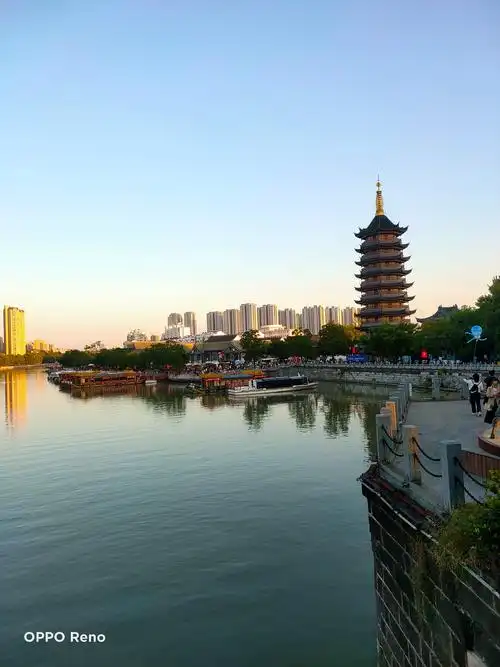
Zhahe Cultural Park nestles alongside the Zha River in Bengbu, seamlessly blending a millennium-old waterway with natural ecology. Winding through the park like a jade ribbon, the river is flanked by lush greenery—where peach blossoms flutter in spring and reeds sway gently in autumn. An ecological corridor links wetlands, woodlands, and waterside trails, composing a vivid, living landscape painting.
At the heart of the park lies the ancient bridge ruins, its soul and centerpiece. The surviving stone arch piers silently recount the bustling canal transport of the Sui and Tang dynasties, while the gentle murmur of flowing water beneath evokes echoes of ancient merchant ships’ creaking hulls and rhythmic boatmen’s chants.
Fitness trails run along the riverbank; morning exercisers tread on bluestone paths, enjoying distant views of Bengbu’s skyline and the poetic sight of waterfowl skimming the surface nearby.
Historically, the Zha River was a vital tributary of the Grand Canal. During Emperor Yang of Sui’s southern tours, grain transport vessels once gathered here. In the Ming dynasty, renowned hydraulic engineer Pan Jixun oversaw dredging projects that transformed the Zha River into a crucial transportation hub linking north and south.
Within the park, a cultural promenade features reliefs and inscribed stone tablets that vividly narrate this rich history. Visitors can follow the course of the ancient riverbed, tracing the imprints of time. At dusk, golden sunlight gilds the water’s surface, casting the silhouette of the ancient bridge against the modern fitness path—a harmonious dialogue between past and present.