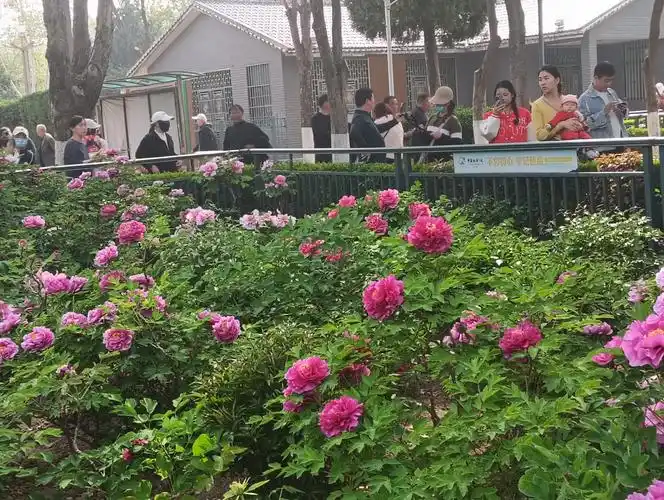
The Heze Caozhou Peony Trading Market is the largest peony flower distribution hub in China. More than just a center for floral commerce, it is a living temple of peony culture, blossoming with millennia of cultural heritage. Inside, fresh flowers bloom like clouds, dried petals drift like snow, and an array of exquisite cultural and creative products dazzles the eye—from fresh-cut peony branches and dried-flower bookmarks to intricate cloisonné ornaments. Every detail reflects the elegance and vitality of Heze peonies. At dawn, flower farmers weave through the market carrying bundles of freshly cut blooms, while the air fills with a delicate, lingering fragrance, as if one were floating through a sea of moving flowers.
The market is divided into three thematic zones: the Flower Materials Trading Area, the Cultural & Creative Experience Zone, and the Intangible Cultural Heritage Exhibition Area. In the Flower Materials Zone, Heze peonies are renowned for their large, vivid blooms and full, luxuriant forms, with cultivars like “Zhao’s Peony” and “Caozhou Red” especially prized. The Cultural & Creative Zone showcases artisanal treasures such as hand-painted peony round fans and embroidered sachets; visitors can even participate in hands-on peony floral art workshops, experiencing firsthand the warmth and grace of “China’s national beauty.” Meanwhile, the Intangible Cultural Heritage Zone displays traditional crafts featuring peony motifs—paper-cutting, clay sculpture, and more—capturing the flower’s beauty within miniature masterpieces.
Peony cultivation in Heze dates back to the Han Dynasty, and by the Song Dynasty, these blooms had become imperial tributes. The Northern Song dynasty literary giant Su Shi once penned here the famous line, “One crimson blossom, one tender grace,” inspiring countless poets and scholars to visit and compose verses in praise of the peony. Today, the market stands not only as a commercial landmark but also as a vibrant vessel for the living heritage of peony culture—where every bloom carries the glory and poetic spirit of China’s “national flower.”