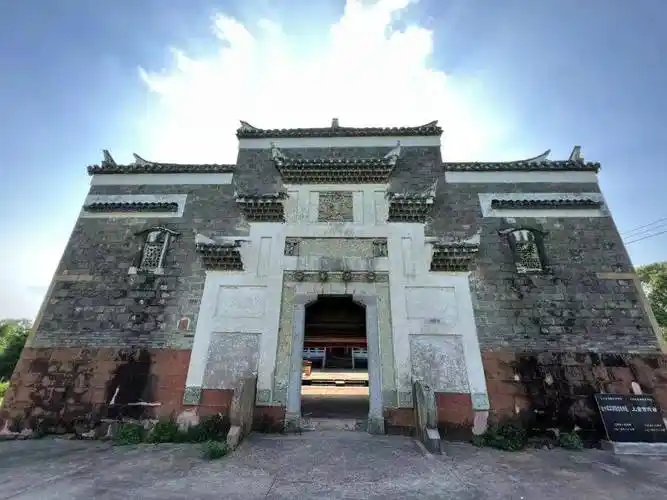
As the earliest administrative center of the Wuhu region during the Han dynasty, the ancient Yiyang Commandery site serves as a vital window into the origins of Yangtze River civilization. At its core lie the rammed-earth foundations of city walls and clusters of Han-era tombs, while a remarkably preserved drainage system testifies to the advanced architectural ingenuity of ancient inhabitants. Excavated artifacts include intricately decorated bronze bianzhong bells and gracefully flowing pottery figurines; among them, a bronze ding cauldron inscribed with "Yiyang Commandery" is especially precious. Its taotie motifs directly echo those found on ritual vessels from the Central Plains, bearing witness to the cultural fusion between Chu and Han traditions.
Inside the site’s "Hanfeng Pavilion," over 200 artifacts are displayed: bronze swords still gleam with their original sharpness, and fragments of lacquered woodwork retain cloud patterns that silently recount past glories. Archaeologists unearthed beneath a rammed-earth platform a bronze seal inscribed "Seal of the Governor of Yiyang Commandery," confirming the site’s strategic importance during the Western Han period. Surrounding the site, groups of ancient wells and rammed-earth flood-control embankments further reveal the resourceful ways in which Han-era communities adapted to and contended with nature.
Strategically positioned between Nan Commandery and Yangzhou Commandery during the turbulent transition between the Chu and Han eras, ancient Yiyang was a crucial transportation hub. Emperor Guangwu (Liu Xiu), founder of the Eastern Han dynasty, once stationed troops here, and his famed general Feng Yi earned the epithet "Tiger Fang" for his valor. Bamboo and wooden slips excavated from the site record tax levies such as "Yiyang Commandery annually delivers ten thousand dan of grain," offering tangible evidence of how the Han dynasty's commandery-county administrative system operated. Even after lying dormant for millennia, this land continues to radiate the intertwined brilliance of bronze and pottery—a testament to enduring civilization.