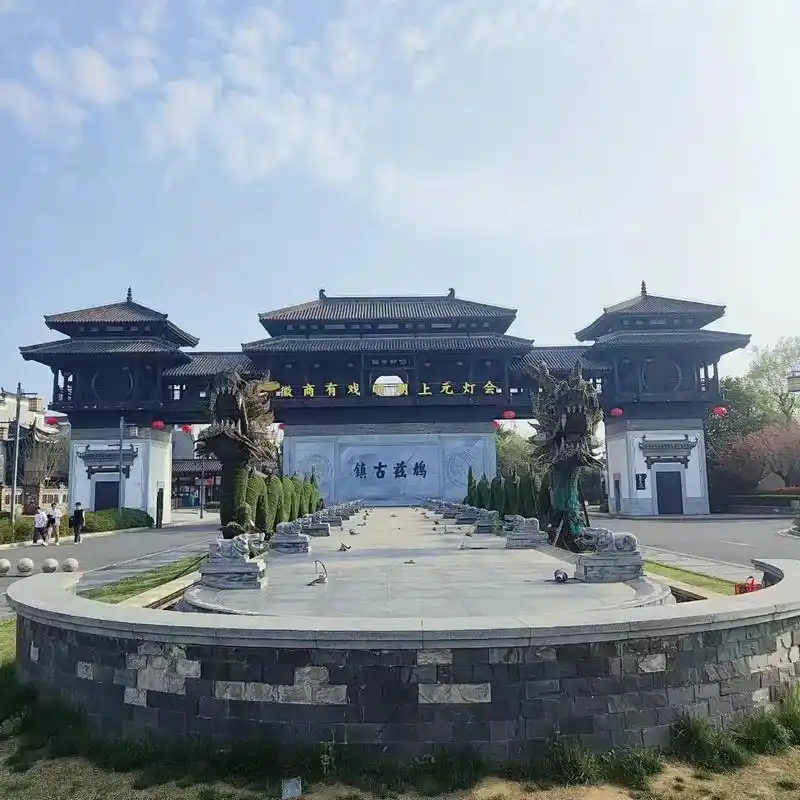
Jiúzì Gǔzhèn is located on the banks of Mirror Lake in Wuhu, it is one of the few well-preserved Ming and Qing ancient architectural groups in the Jiangnan region. Smooth cobblestone streets wind and weave, layered horse-head walls stand side-by-side, and carved window frames gleam with a warm luster in the sunlight, as if time itself has solidified here. The town currently houses over 20 ancient buildings, including the Temple of Literature and the Temple of Guan Di, which retain complete Ming and Qing construction techniques. The eaves and ridges of the buildings still bear the brick carvings of "Jiúzì," telling the story of this thousand-year commercial port's prosperity. The ruins of the ancient bridge to the west of the town witness the thousand-year connection of "Jiúzì." During the Spring and Autumn period, this area was a territory of the Wu and Yue states, and later became a key route between the north and south due to its convenient water transport. Zheng He's Ming Dynasty fleet once assembled here, and the sounds of Wuhu iron paintings and the oars of the Grand Canal converged here. Deep in the ancient street, the “Three Carvings” craft workshop displays Wuhu iron paintings, Heshou bamboo carvings, and wood carvings. Traditional craftsmen still use ancient methods to paint with ink and brushes, transforming "Jiúzì" into an eternal artistic symbol. Walking through the ancient alleys, you can find Ming Dynasty salt merchants' brick carved gate towers, and the crouching beast carvings still exude dignity. The old mansions of Qing Dynasty tea merchants have theaters with the vivid scenes of the "Romance of the Three Kingdoms." The "Jiúzì" stone stele at the entrance of the town and the "Mirror Lake" inscription create a beautiful contrast, perfectly blending history and nature. This ancient town is not only a feast for the eyes of architecture, but also a living inheritance of Jiangnan commercial civilization and craftsman spirit. Every brick is engraved with the code of the merchant gang culture, and every carved window reflects the glory of the thousand-year commercial port.