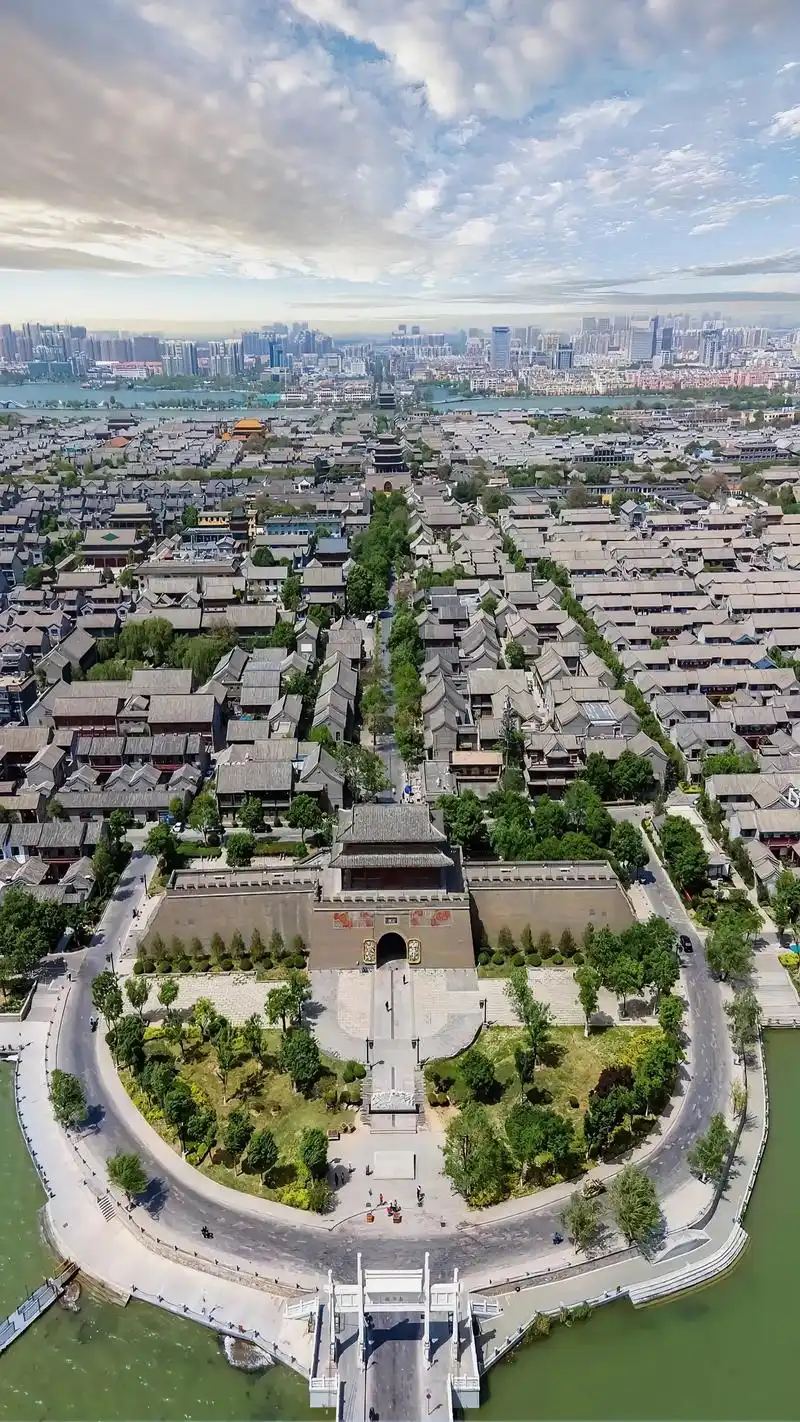
Liaocheng’s ancient city was built alongside the Grand Canal. Its imposing Ming- and Qing-era city walls, stretching nine li and eighteen bu (approximately 4.5 kilometers) in circumference, still stand proudly today. Constructed of gray bricks, these walls have withstood over four centuries of wind and rain, yet retain a gentle, time-honored luster.
Strolling through its historic alleys, one catches the scent of tea drifting through the morning mist at Liuyuan Wharf. The cobblestone paths beneath Guangyue Tower bear the footprints of merchants from the Ming and Qing dynasties—every turn revealing a story. The upturned eaves and interlocking brackets of Dongchangfu’s City God Temple speak of Confucian heritage, while the intricate brick carvings and murals of the Shanxi-Shaanxi Guild Hall immortalize the legendary tales of Jin merchants.
Guangyue Tower, renowned worldwide for its unique octagonal pavilion design, offers panoramic views of the misty waters of the Grand Canal. Inside, a Ming dynasty bronze mirror and a surviving fragment of the Song dynasty architectural treatise *Yingzao Fashi* silently converse across time. Amid the lively bustle of Liuyuan Folk Street, intangible cultural heritage crafts—such as shadow puppetry, paper-cutting, and clay sculpture—thrive with vivid vitality. As night falls, lanterns cast their glow upon ancient lanes, transforming them into rivers of starlight.
As a vital hub on the Grand Canal, Liaocheng once gathered the hydraulic wisdom of Pan Jixun, the famed Ming-era river engineer; witnessed the literary pursuits of Li Panlong, a Ming poet who built his “Duishan Pavilion” here; and saw the humble philanthropy of Wu Xun, a Qing-era educator who funded free schools for the common people. Today, the ancient city seamlessly blends canal culture, Confucian tradition, and everyday urban life. Between its gray-tiled roofs and brick walls, past and present coexist and flourish—a poetic dwelling that feels like stepping through time itself.